What is 200 Yoga Teacher Training
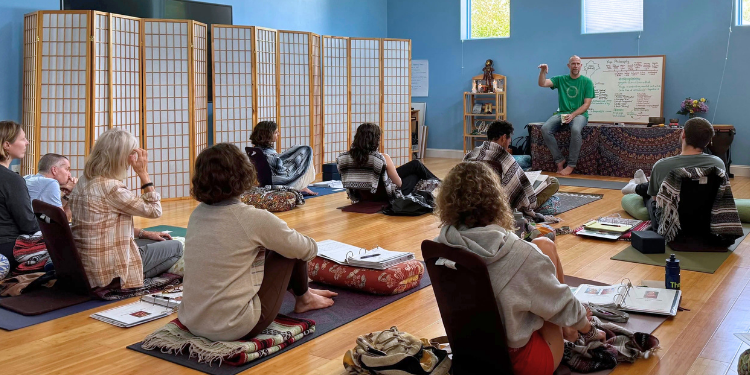
Q1: What is a 200-hour yoga teacher training?
It’s the foundational certification that qualifies you to teach yoga, built around Yoga Alliance’s standards and covering asana, pranayama, meditation, anatomy, philosophy, and how to actually lead a class. But what most program pages won’t tell you is that the credential is almost secondary to what happens inside those hours. People walk out understanding their own practice and their own mind in ways they didn’t go in. That tends to be the part they talk about most.
Q2: How long does a 200-hour yoga teacher training take?
Anywhere from four weeks to several months, depending on the format. Intensive programs run full-time daily for roughly a month. Weekend formats spread the same hours across eight to twelve weekends, which works well if life doesn’t pause easily for you. The curriculum depth is the same either way. What’s different is the pace and how it fits around everything else you’re carrying. It’s worth thinking honestly about which one you’ll actually show up for fully, not just attend.
Q3: How much does a 200-hour yoga teacher training cost?
Most programs land between $2,000 and $4,000. Payment plans, early enrollment pricing, work-study, and needs-based scholarships are more common than people assume. Ask directly rather than ruling a program out before you know what’s available. And when you’re comparing costs, look at what’s actually included. Faculty experience, curriculum depth, how much real teaching practice you get—those things vary a lot, and price alone won’t tell you which program is worth it.
Q4: What comes after a 200-hour yoga teacher training?
You become eligible to register as an RYT 200 with Yoga Alliance, the credential most studios, wellness programs, schools, and hospitals use as their hiring baseline. Where you go from there is genuinely wide open. Some people start teaching right away. Others move into 300-hour training to go deeper in philosophy, yoga therapy, or a specific lineage. Some don’t teach professionally at all and still say it was worth every hour. The 200-hour yoga training tends to work more like a foundation than a finish line, something you keep building on long after graduation.
Q5: Who can join a 200-hour yoga teacher training?
Most programs ask for six months to a year of personal practice before you begin. Not because you need to be advanced; you don’t, but because you need to know what practice feels like from the inside before learning to guide others through it. Beyond that, people of all ages, backgrounds, and experience levels enroll, and a lot of them have no plan to teach professionally. They’re there to understand what they’ve been doing on the mat, to study philosophy properly, or to explore meditation in a real structure. Curiosity
and honesty with yourself matters more than how long you can hold a pose. Check with your program on specific prerequisites.
Q6: What will I learn in a 200-hour yoga teacher training course?
More than you’re expecting. The physical side covers asana alignment, anatomy, sequencing, cueing, and hands-on assists. The philosophical side goes into the Yoga Sutras, the Bhagavad Gita, the eight limbs, and the subtle body, not as background reading but as actual study. Pranayama and meditation are central, not supplemental. And then there’s teaching practice: standing in front of real people, getting real feedback, building something that actually holds up. By the end of a well-built 200-hour yoga alliance teacher training, the knowledge doesn’t sit in separate compartments anymore. It becomes one way of seeing.
Q7: Where is the best place to do a 200-hour yoga teacher training?
Depends on how you learn and who you want to learn from. Full Yoga Alliance registration is non-negotiable; without it, your hours won’t count toward RYT 200. After that, look hard at the faculty. How long have they been practicing? Who did they train under? A teacher who has lived inside this material for decades teaches differently than someone who completed their own training recently. Ask how much you’ll actually teach during the program; the answer matters more than almost anything else on the brochure. And if you can, talk to someone who already went through it. Not the website testimonials. An actual person.