Kadma – Sweet Offered To Goddess Kali – Story – Importance
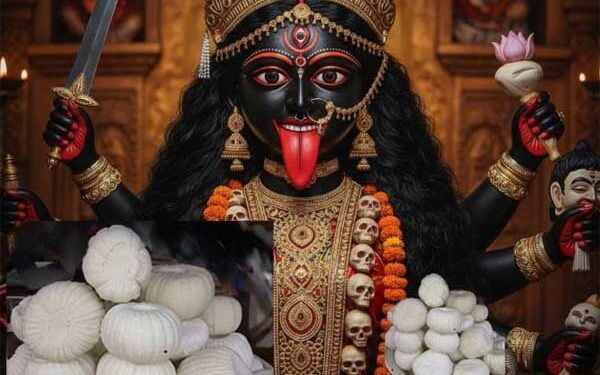
Kadma: The Sacred Sweet of Goddess Kali and Its Divine Origin
In the rich tapestry of Hindu worship traditions, certain offerings hold profound significance that transcends their material form. Kadma, the distinctive sweet offered to Goddess Kali during Kali Puja on Kartik Amavasya in Bengal, represents one such sacred offering. This unique confection, made solely from sugar and water, has become an indispensable part of Kali worship, embodying both devotion and divine intervention.
The Divine Birth of Kadma
The origin of Kadma is rooted in a remarkable account of divine guidance. In ancient times, the village of Mankar in Purba Bardhaman was surrounded by dense forests and inhabited by dacoits. Among them was Hiru Dacoit, a devoted worshipper of Goddess Kali who never failed to perform her puja before his nightly expeditions. On one fateful Kartik Amavasya, Hiru had meticulously arranged fruits and sweets for the worship when his pet dog, Kalu, consumed the entire offering.
Distraught at the prospect of incomplete worship, Hiru fell asleep in despair. In his dream, Goddess Kali appeared and provided divine instruction (Swapnadesh). She directed him to approach Kadam, a local confectioner, with her command to create a sweet using only sugar and water, shaped like the Kadamba flower. The confectioner successfully created this offering, which came to be known as Kadma, and Hiru completed his worship with this divinely inspired sweet.
The Sacred Preparation and Form
Kadma is crafted through a precise process that reflects the purity of the offering. Sugar is boiled until it reaches the perfect consistency, then rolled into spherical forms and cut using threads. The top and bottom are gently flattened, creating a shape reminiscent of an orange or the Kadamba flower. This simple yet deliberate preparation, using only sugar and water, symbolizes the offering of pure sweetness to the Divine Mother.
The tradition of making Kadma begins around Vishwakarma Puja, celebrated on Bhadra Sankranti. This timing is significant as it coincides with the blooming of Kadamba flowers, when the monsoon recedes and nature transitions into autumn. This connection to natural cycles reminds devotees of the divine presence in all of creation.
Religious Significance in Kali Worship
In Bengal, it is firmly believed that Kali Puja remains incomplete without placing Kadma in the left hand of Goddess Kali. This tradition is so deeply ingrained that one finds Kadma depicted in the hands of famous Kali idols throughout the region. The offering represents the devotee’s surrender of all sweetness—symbolic of worldly pleasures and attachments—to the Divine Mother.
The Bhagavad Gita declares, “Patram pushpam phalam toyam yo me bhaktya prayacchati, tad aham bhakty-upahritam ashnami prayatatmanah” (9.26), meaning “If one offers Me with love and devotion a leaf, a flower, fruit, or water, I will accept it.” This verse emphasizes that divine acceptance depends not on the grandeur of the offering but on the purity of devotion. Kadma, made from simple ingredients with devoted intention, perfectly embodies this principle.
The Ritual of Kadma Bali
An extraordinary tradition exists in Bengal of performing “Kadma Bali”—the symbolic sacrifice of Kadma before the Goddess. At Mankar’s Boro Maa temple, one of the oldest Kali Puja centers in Bengal, a pair of Kadmas weighing five Ser (approximately 4.65 kilograms) each is offered to the Goddess. This ritual substitutes animal sacrifice with a sweet offering, demonstrating the evolution of worship practices toward ahimsa (non-violence) while maintaining the symbolic essence of complete surrender.
Symbolism and Spiritual Meaning
The shape of Kadma, resembling the Kadamba flower, carries deep symbolism. The Kadamba flower is associated with Lord Krishna and represents divine beauty and auspiciousness. In Kali worship, offering Kadma signifies the devotee’s recognition of the Divine Mother as the source of all sweetness, joy, and prosperity in life.
The use of only sugar and water in Kadma’s preparation symbolizes purity and simplicity in devotion. Sugar represents the sweetness of divine love and grace, while water symbolizes the flow of devotion and the essential sustenance of life. Together, they create an offering that is both materially simple and spiritually profound.
The Devi Mahatmya teaches us about the Mother’s compassion and her willingness to accept offerings made with genuine devotion. Goddess Kali, though fierce in appearance, is ultimately the compassionate mother who responds to her children’s sincere worship, as demonstrated in her divine instruction to Hiru Dacoit.
Cultural Heritage and Continuing Tradition
Mankar remains famous for its Kadma tradition, and the Boro Maa Puja continues to be celebrated with great fervor. Artisans dedicate months to perfecting the craft of Kadma-making, ensuring that this sacred sweet maintains its traditional form and significance. The offering has transcended its regional origins to become recognized as Devbhogya (fit for divine consumption) and a cherished prasad in Hindu worship.
The story of Kadma teaches us that the Divine Mother accepts offerings based on devotion rather than opulence. It demonstrates how crisis can lead to divine intervention and how traditions born from faith become eternal practices in Hindu worship. Through Kadma, devotees continue to experience the sweetness of divine grace and the fulfillment that comes from sincere worship of Goddess Kali.

