Wrist Ornament – Circular Bracelet or Bangle Of Hindu Sculptures
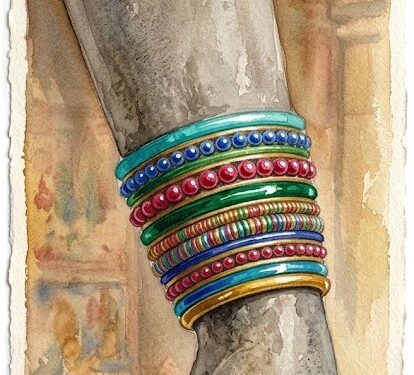
The circular bracelet or bangle worn by Hindu sculptures is traditionally known as kankana. Worn around the
wrist at the manibandha (wrist joint), it is typically represented as a
circular bracelet or bangle that closely embraces the wrist. Unlike the broader
kataka, which often appears heavier and more elaborate, the kankana is
comparatively compact, refined, and gracefully proportioned. Sculptural
traditions depict it either as a plain circular band or embellished with beads,
ridges, floral motifs, miniature plaques, or decorative terminals. In many
divine and royal images, multiple kankanas are worn together, creating a
harmonious rhythm that enhances the beauty and spiritual dignity of the figure.
Far more than a decorative accessory, the kankana embodies
discipline, auspiciousness, strength, and the sacred relationship between
action and dharma. Every ornament adorning a sacred image in Hindu sculpture
carries philosophical significance, and the kankana is no exception.
Kankana in the Shilpa Tradition
Classical Hindu sculptural treatises classify the kankana
among the hasta abharanas, the ornaments of the hands and wrists. The sculptor
is instructed to proportion the bracelet carefully so that it complements the
anatomy without overpowering the elegance of the wrist. Its placement creates a
graceful visual transition between the forearm and the palm, contributing to
the balanced symmetry that is central to Hindu iconography.
Traditional iconographic manuals also recognize the kankana
as an essential ornament for the images of Devatas, kings, queens, sages in
ceremonial forms, and noble women. Depending upon the nature of the deity, the
bracelet may be plain, beaded, ribbed, faceted, or richly ornamented. Images of
Bhagavan Vishnu often display finely crafted bracelets reflecting divine
majesty, while forms of Shiva may wear comparatively simpler yet powerful wrist
ornaments that express ascetic dignity combined with cosmic authority. Images
of Devi frequently feature multiple delicately ornamented kankanas symbolizing
beauty, prosperity, and divine energy.
Bronze icons, particularly those produced through the
traditional lost-wax process, depict the kankana with remarkable refinement.
The bracelets closely embrace the wrist and often appear in multiple layers,
enhancing the realism and sacred elegance of the divine form.
Symbolism of the Circular Bracelet
The circular form of the kankana carries profound symbolism
within Hindu philosophy. A circle has neither beginning nor end, representing
eternity, completeness, and the continuous cycle of creation, preservation, and
dissolution. The bracelet reminds devotees that divine existence transcends
time while all actions performed by embodied beings become part of the eternal
cycle of karma.
Positioned at the wrist, the kankana also symbolizes the
sanctification of action. The wrist serves as the pivot through which the hand
performs every deed, whether ritual worship, charity, protection, teaching, or
service. By adorning this vital joint, the sculpture communicates that every
action undertaken by the divine is guided by wisdom, righteousness, and
compassion.
The ornament further signifies restraint. Just as the
bracelet gently encircles the wrist without restricting movement, dharma guides
human actions without suppressing freedom. It serves as a visual reminder that
true freedom flourishes within the discipline of righteous conduct.
The Sacred Hand and Divine Action
In Hindu thought, the hands are instruments of both karma
and seva. Every mudra displayed in sacred sculpture conveys protection,
blessing, teaching, meditation, or fearlessness. The kankana frames these
sacred gestures, emphasizing that divine actions are always purposeful and
compassionate.
Bhagavad Gita beautifully teaches the sanctity of righteous
action:
“You have a right to action alone, but never to its
fruits. Let not the fruits of action be your motive, nor let your attachment be
to inaction.”
Bhagavad Gita 2.47
This teaching resonates symbolically with the placement of
the kankana upon the wrist. The ornament becomes a visual reminder that actions
performed in harmony with dharma become offerings to the Divine rather than
expressions of personal attachment.
Artistic Importance in Hindu Sculpture
The kankana demonstrates the extraordinary attention to
anatomical precision found in Hindu sculpture. Sculptors carefully balanced the
ornament’s thickness, curvature, and decorative detail so that it enhanced
rather than distracted from the natural proportions of the hand. Multiple
bracelets create rhythmic repetition that guides the viewer’s eye toward the
expressive mudras, which are central to the spiritual communication of the
image.
Stone sculptures often present the bracelet with incised
beadwork, floral bands, geometric carvings, or jewel-like projections. Bronze
icons employ smooth polished bands or finely modeled ribbed surfaces that
reflect light beautifully during worship, reinforcing the sacred presence of
the murti.
The ornament also serves as a marker of identity. Divine
figures, royal personages, celestial attendants, and noble devotees each wear
variations suited to their spiritual and social status, demonstrating the
sophisticated iconographic vocabulary preserved within Hindu sculptural
traditions.
Relevance in Modern Sacred Art
The kankana continues to hold significance in contemporary
temple sculpture, bronze casting, devotional painting, classical dance, and
traditional jewelry design. Modern sthapatis faithfully preserve the classical
principles established in ancient sculptural traditions while adapting
ornamental details to contemporary craftsmanship.
Traditional goldsmiths continue to create bracelets inspired
by temple sculpture, incorporating lotus petals, beaded borders, sacred
geometric forms, and auspicious motifs that reflect centuries of artistic
continuity. Classical dancers likewise wear wrist ornaments modeled after
sculptural examples, allowing sacred iconography to remain a living artistic
tradition rather than merely an archaeological heritage.
For devotees, the kankana remains a reminder that beauty and
spirituality are inseparable when aligned with dharma. It teaches that every
action performed by the hands should be guided by purity, compassion,
self-discipline, and devotion.
Conclusion
Though modest in size, the kankana carries profound symbolic
and artistic significance within Hindu sculpture. Its graceful circular form
represents eternity, righteous action, discipline, and auspiciousness, while
its placement upon the wrist sanctifies every divine gesture portrayed in
sacred art. Through careful proportion, refined craftsmanship, and enduring
symbolism, the kankana exemplifies the Hindu understanding that even the
smallest ornament contributes to expressing the spiritual perfection of the
divine form. It remains a timeless testament to the harmonious union of art,
devotion, philosophy, and sacred craftsmanship that defines the enduring legacy
of Hindu sculptural tradition.

