Understanding Kati Hasta in Hindu Iconography – Resting Upon the Hip
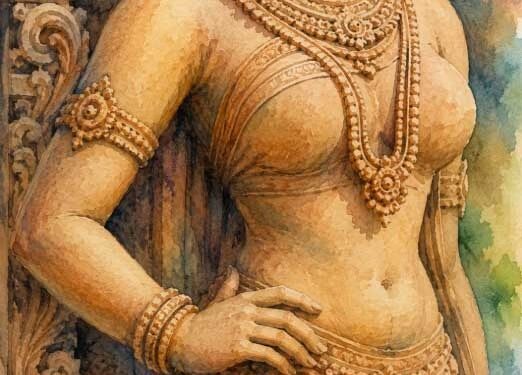
Kati Hasta: The Language of Repose in Hindu Sculpture – Kati Avalambita Hasta: Poise, Power and Stillness in Divine Form
In the vast vocabulary of Hindu sculptural art, every
gesture of the hand carries meaning far beyond decoration. Among these
gestures, kati hasta, also called kati avalambita hasta, stands out as one of
the most quietly powerful. The term comes from kati, meaning waist or hip, and
avalambita, meaning resting or hanging upon. Together they describe a hand
placed gently at the hip, an image so simple that it is easy to overlook, yet
so deliberate that it defines the entire emotional register of a standing figure.
The Posture and Its Execution
In classical iconometric treatises followed by sculptors and
craftsmen, the standing image, particularly in tribhanga or samabhanga
postures, was never composed arbitrarily. The kati hasta typically employs the
left hand, bent at the elbow, coming to rest on or just above the hip. The
fingers are neither clenched nor stiff but softly curved inward, following the
natural line of the waist or upper thigh. This is a resting hand, not an active
one, and the sculptor’s task was to render that rest convincingly, so the stone
or bronze appears to breathe.
Symbolism and Philosophical Meaning
Where hastas like abhaya (reassurance) or varada
(boon-giving) communicate outward action toward the devotee, kati hasta turns
inward. It signals a being who is complete, unhurried and self-possessed. In
temple sculpture, this gesture is frequently paired with an active hand
carrying an attribute or making a blessing gesture, so that the standing form
embodies both engagement with the world and detachment from it simultaneously.
This duality mirrors a recurring idea in Hindu thought, that true authority does
not announce itself through tension but through ease. The Bhagavad Gita speaks
of the person who acts without agitation, established in evenness of mind, a
state described as samatvam. While kati hasta is a convention of the shilpa
shastras rather than a direct scriptural mudra, its emotional character
reflects this very ideal, stillness that carries strength within it.
Usage in Iconographic Compositions
The gesture appears widely in standing images of Vishnu, in
devi icons such as forms of Lakshmi and Parvati, and in numerous balanced,
symmetrical temple compositions from South Indian bronze traditions to North
Indian stone carving. In these images, the hip-resting hand grounds the figure
visually, balancing the vertical rise of the body and giving the composition a
settled base, both physically in terms of sculptural weight distribution and
symbolically in terms of divine composure.
Relevance in Modern Art and Practice
Contemporary dancers trained in Bharatanatyam, Odissi and
other classical forms continue to study and perform kati hasta as part of their
nritta and abhinaya vocabulary, keeping the gesture alive outside temple walls.
Modern sculptors, illustrators and even fashion and product designers drawing
on Hindu iconographic themes often return to this pose precisely because it
communicates dignity without aggression, making it a favoured reference point
when artists seek to depict calm, centred authority in contemporary figurative
work.
Kati hasta reminds us that in Hindu artistic tradition,
stillness is not the absence of meaning but one of its richest expressions. A
single hand resting at the waist becomes a statement of composure, balance and
quiet strength, principles that continue to resonate wherever these forms are
studied, danced or carved today.


